Village Mentoring Program 2013
Friday, 22/02/2013SurveyMETER


SurveyMETER Sharing Knowledge in Bantul District
The village mentoring program is a knowledge sector program implemented under the structure of the Regional Assistance and Development Division of SurveyMETER. The SurveyMETER mentoring team would assess and assist two villages within a year in terms of institutionalizing the village administration system, basic public services, and compiling village profiles. It was planned that ECED and elderly groups would be the focus of assistance there in the next few months.
The inspiring and driving background of the program—as stated by program coordinator Setyo Pujiastuti that the village is the spearhead of development, so the availability of village profile data is very important. According to Permendagri No. 12 of 2007, village profile data is the reference for planning development programs and community empowerment, as well as very much needed in the process of implementation, monitoring, and evaluation of it.
The institutionalizing of the village administration system issues, especially in the reporting administration and improving better basic public services towards elderly health services and early childhood education (ECED) as the focal points are being worried. Based on Bantul in Figures in 2012, the growth of the elderly is on average above 10% per year. Their population (aged 60 years and over) in the Bantul district reached 111,750 people consisting of 49,892 males and 61,858 females in 2011. In the meantime, based on the results of a survey in Yogyakarta, given that most ECED teachers were village cadres who were concerned with early childhood education but had yet to have any teacher education background or ECED teaching courses.
The moves of the SurveyMETER mentoring team commenced by seeking information about the village profile from the Village Community Empowerment (PMD) Office of the Bantul district government. From the information obtained, in fact, the Bantul district government through the Village Community Empowerment Office has attempted to encourage and assist villages in compiling profile data but having entered 2013, knows that still many villages have not completed the 2012 profile data report.
Furthermore, a team of 7 members (Dani Alfah as person in charge), Setyo Pujiastuti (as coordinator), Fita Herawati, Edy Purwanto, Sukamtiningsih, Muhammad Mulia, and Nur Suci Arnashanti (as implementer) conducted field observations. “Known that of the visited 5 villages in the 5 sub-districts, all have not completed the 2012 village profile data yet. The obstacles faced by the villages in compiling the profile generally were lack of funds, human resources, equipment, and tools. Even based on our observations, actually, these villages could mobilize the participation of cadres in the community to make data collection successful," said Setyo.
The PMD Bantul office then recommended 4 villages to conduct a survey first, namely Karangtengah of Imogiri sub-district, Argosari of Sedayu sub-district, Guwosari of Pajangan sub-district, and Jatimulyo of Dlingo sub-district. From the recommendation and observation results, the mentoring team selected two villages to assist: Guwosari and Jatimulyo villages.
The purpose of this village assistance program generally is to help facilitate, identify, and develop village potential as well as foster community independence and participation in improving their welfare. In detail, the objectives of this village mentoring program were the realization of villages that have good data (coverage, updated, quality) by assisting the completion of the 2012 village profile; institutionalization of a best practice in the village administration system, especially on the village reporting; and improve better basic public services, particularly to health problems for the elderly and early childhood education (ECED).
"SurveyMETER's concern for the welfare of the elderly would be manifested in studies and assistance to the elderly group. It would be carried out in two villages through health education to the elderly and their families, while for PAUD teachers, we were planning capacity-building activities in teaching since ECED is very important as pre-primary education to prepare quality future generations,” said Setyo further while explaining that the mentoring activity had commenced in December 2012. [JF]
Program Activities of Knowledge Sector 2013
Tuesday, 12/02/2013SurveyMETER

SurveyMETER fulfilled the commitments to design, compile, and follow up on the self-initiative (independent) research and mentoring activities. It has been administered for the last 2 years with the support of the Australian AID Knowledge Sector through The Asia Foundation. As stated by its representative Benjamin Davis earlier that the Australian AID Knowledge Sector provided cost support for research institutions in transforming themselves by conducting research unconsidered as a 'client order'.
SurveyMETER conducted four independent studies simultaneously plus one mentoring program in 2013. The five self-reliant agendas currently being worked on were: The Well-Mannered Elderly Health Center Study (SPSL), the Elderly-Friendly City Capacity Assessment Study (SKRL), the Data-Based Policy Study (SKBD), the Nutrition Education Study (SEN), and the Village Mentoring Program. This Village Assistance Program took place in the Bantul district and commenced its activities in December 2012.
To date, the activities of the four studies were still ongoing, such as the SEN and SKBD working in the last week of field data collection while several SKRL teams had already returned from the field. Simultaneously, the SPSL has completed field data collection activities, even according to the coordinator of the study, Sunar Indriati, it passed into the final stage of data cleaning. "We have entered the analysis process that prepared for the writing of the paper in early next March, " said Indra, her nickname. [JF]
Population Aging and Development Workshop: Documentation, Challenges and Next Steps
Friday, 21/12/2012SurveyMETER

The aging of the population has become a global concern in the twenty-first century, particularly in wealthy nations. In Asia as well, the issue of population aging has taken on social, political, and economic significance. Japan and Korea represent two nations with sizable senior populations. Population aging has been explicitly linked to development initiatives in both countries, which have actively designed and implemented such programs. Population aging can be seen as a success of development since it allows people to live longer due to improved health, education, sanitation, nutrition, and other factors. According to estimates, Indonesia's percentage of the senior population will be the same as Singapore's in 2025, although Indonesia's per capita income will be significantly less than Singapore's. How will Indonesia pay for its elderly population then? There has also been a significant increase in the population of the elderly. According to estimates, it will surpass the number of those under the age of fifteen in 2025, reaching 32 million people, and reach 40 million people in 2030. Senior citizens need extra attention. Is Indonesia ready for this?
That is part of the speech and introduction to the forum from Mrs. Bondan S. Sikoki, S.E., M.A., as Director of SurveyMETER representing the Organizing Committee at the opening of the workshop "Population Aging and Development: Documentation, Challenges and Next Steps". This event was organized by SurveyMETER in collaboration with the Emong Lansia UI Foundation, Center for Aging Studies - University of Indonesia, The Asia Foundation, and Australian Aid. The event took place at The Phoenix Hotel Yogyakarta on 19 – 20 November 2012. This workshop lasted two days, presenting 29 speakers and 150 participants who were stakeholders in the problem of population aging, both from the government, the community, NGOs, academics and international institutions.
The Deputy Minister of Health of the Republic of Indonesia, Prof. Dr. Ali Gufron Mukti M.Sc., Ph.D., was in attendance. He gave a keynote speech. The Head of the Yogyakarta Special Region Health Service, Dr. Sarminto M. Kes, represented the Governor of DIY and symbolically opened the meeting on the first day of the event. Other attendees included representatives from the Department of Indonesian Social Affairs, Drs. Mulyo Johni, M.Si., Knowledge Sector AUSAID Benjamin Davis, Chairman of the National Commission for the Elderly, Dr. Toni Hartono, BAPPENAS representative, Chairman of the Damandiri Foundation, Prof. Haryono Suyono M.A., Ph.D., and the workshop steering committee, Prof. Tri Budi W. Rahardjo, Dra Eva A.J. Sabdono, MBA, and Bondan Sikoki S.E., M.A.
Support from AUSAID for Indonesia
Benjamin Davis, the Knowledge Sector representative for AUSAID, stated in his speech that the organization's goal in implementing this initiative was to raise the standard of public policy in Indonesia in a number of ways. Presenting study findings that can be applied to the formulation of policy is one of them. In addition, by assisting governmental organizations in utilizing the findings of the research, also serves as a mediator or go-between for researchers and policymakers.
Since Benjamin acknowledged that public policy was his area of expertise, he presented himself as a student who was eager to absorb as much information as possible from the workshop presenters. Additionally, he stated that AUSAID and The Asia Foundation have worked together to facilitate knowledge institutions like SurveyMETER, which has been positioning itself as a knowledge institution in Indonesia for the past two years. Knowledge institutions receive funding from AUSAID to advance their own missions, particularly to carry out non-commissioned research. Because of this, AUSAID gives knowledge institutes the chance to carry out and analyze their own research.
Benjamin claims that in addition to being the first to bring up the topic of aging, SurveyMETER and the organization hosting this event have taken proactive steps to elevate it. Benjamin predicts that this type of discussion will happen more regularly since it provides a place for policymakers and researchers to discuss issues—in this example, aging. Aside from that, Yogyakarta is the most senior-friendly city in Indonesia, making it a perfect location for this convention. The workshop aims to draw attention to Indonesia's aging population from a variety of angles, including social, economic, and cultural. Benjamin claims that Australia is similarly dealing with the issue of aging. The workshop's participants were drawn from a variety of universities. Hopefully, the outcomes of this conversation continue. Benjamin stated in his speech, "I hope that policymakers and researchers can find common ground regarding dealing with aging problems."
According to Mrs. Bondan from SurveyMETER, the goal of this activity is to provide a venue for all parties involved to gather, talk about the topic of aging, and record the actions completed, obstacles encountered, and next initiatives that will be taken. It is also hoped that it will become a forum for sharing information, discussing, and finding common ground to work together and formulate follow-up plans. Additionally, it is intended that a social network on the topic of population aging can be developed following the workshop. Benjamin anticipates that the forum will cover a wide range of topics in the interim, such as the best ways to finance and support the elderly population, how the Indonesian health system can assist the elderly, which pension or old age security system is best suited for Indonesia, how the private sector can play a role in this, the sociocultural context, and the roles that families and society play in this matter.
The paradigm that needs to be changed
Aging will be followed by a decline in bodily function, which will lead to lower output, according to Sri Sultan Hamengkubuwono, the governor of Yogyakarta's Special Region. The stereotype of the elderly as being ill and dependent on others is common. Because life expectancy is rising and birth rates are falling, there are more elderly people in the world.
The Sultan states that one of the main topics of his address would be costs. In 2025, Indonesia will have a huge increase in the number of retired civil personnel. Because a multifaceted solution is required to address this issue, the government, the commercial sector, and society as a whole must pay particular attention. Elderly issues shouldn't be seen as a burden; rather, older people should be given the tools they need to be independent, as this will not only affect their productivity but also their health. Eliminating the belief that older people are "finished and useless" is necessary, because there are still more elderly persons who are useful than those who are not. Sultan also expects that through this event, issues and difficulties may be identified, feedback and ideas can be gathered, and senior citizen initiatives can be developed. Additionally, it is envisaged that increased synergistic collaboration across the public, business, and societal sectors will raise the living standards of the elderly and their families.
In the meantime, in his keynote address, "Government Experience: Strategy and Policy for Elderly Health Services in Indonesia," Prof. Dr. Ali Gufron Mukti, M.Sc., Ph.D., Deputy Minister of Health of the Republic of Indonesia, detailed the Ministry of Health's resolve to change the phrase "poor people are prohibited from sick" to "poor people are prohibited from paying if they are sick" through a number of initiatives. Article 138 of Law No. 36 of 2009 concerning Health clearly defines the legal framework for senior health care. Article 138 stipulates that the goal of health care for the elderly should be to preserve their socioeconomic well-being while upholding their human dignity.
This law serves as a guide for the goals of health development, which include raising people's knowledge, willingness, and capacity to live healthily in order to attain the greatest possible level of public health and enable them to lead fulfilling lives on both a social and economic level. Therefore, in Ali Gufron's opinion, the government must ensure that health services are available and make it easier for the senior population to maintain their independence and contribute to society and the economy. "It is our aim that a minimum standard of service will be provided to the public. "The government has implemented a PP (government regulation) regarding the elderly, which concerns religious, health, and public service issues, for example how the elderly can get friendly service, such as when taking the bus where priority is given and also regarding the use of public facilities," explained Ali Gufron.
Older Adults Health Program Policy
The overall goal of these government rules is to enhance the elderly's health and quality of life so they can age happily and effectively in their families' and communities' lives. In the meantime, the specific goals are to raise elderly people's knowledge of the importance of taking care of their own health, to boost families' and communities' capacity and involvement in enhancing the elderly's health, and to expand the range, accessibility, and caliber of health services available to the aged. Ali Gufron claims that the following government initiatives have been created:
- Increasing and strengthening health efforts for the elderly in basic health services, especially Community Health Centers through the concept of Elderly Courtesy Community Health Centers.
- There should be more efforts made to refer older patients for medical care by creating Geriatric Polyclinics at hospitals—of which there are now just eight class A and B institutions.
- Older people receiving more knowledge and information on nutrition and health.
- Through the creation and mentoring of Elderly Groups/Posyandu for the Elderly in the Community, elder empowerment is achieved.
- Improving the quality standard of home care for the elderly, which is provided in conjunction with the community health care program at community health centers and hospitals.
- Increasing community participation in elderly health efforts through the Health Fund and Jamkesmas.
Following the conclusion of the inaugural events, the first presentation session got underway. The eight presentations, eight forum activities, and the material delivered are implemented as follows.
FIRST DAY
Session 1 Presentation: Experiences from the Government
Dr. Nahiyah J. Faraz, M.Pd., gave a presentation titled "Elderly and Development: Between Hope and Challenges" on behalf of GKR Hemas, Deputy Chair of DPD RI.
Dr. Yulia Suhartini (Director of Social Services for the Elderly, Ministry of Social Affairs of the Republic of Indonesia) presented by Drs Mulyo Johni MSi (Head of Sub-Directorate of Advocacy and Social Services for the Elderly, Ministry of Social Affairs of the Republic of Indonesia)—"Social Services Program for the Elderly"
Maliki Achmad, Ph.D., (BAPPENAS)—"Population Aging and Development: National Transfer Account as One of the Supporting Documentations for Analysis of the Elderly Population Support System"
Dr. Toni Hartono (Chairman II of the National Commission on Elderly)—"Experience from the Government"
Moderator: Prof. Tri Budi W. Rahardjo (Centre for Aging Studies of the University of Indonesia)
Session 2 Presentation: Experiences from the Community
Sabrin O. Ladongi S.Ag, M.M., (Al Kautsar Palu Foundation)—"The Role of the Young Generation in the Development of the Elderly"
Fajarina Lathu Asmarani, S.Kep, Ns., MSN (Elderly Services in the Community, FIKES Respati University Yogyakarta)—“Community Services”
Ruliyandar S.E., M.Kes,—“Golden Geriatric Club (School for the Elderly and Pre-Senior)—Mulia Dua Foundation”
Prof. Dr. Haryono Suyono M.A., Ph.D., (Chair of the Damandiri Foundation)—"Empowerment to Meet the Role of the Elderly in Development"
Moderator: Dra Eva A. J. Sabdono, MBA, (UI Emong Elderly Foundation)
Session 3 Presentation: Experiences from NGOs
Prof. Dr. Luh Ketut Suryani (Suryani Institute)—"Program for Fostering the Elderly in Bali: Happy, Fulfilling, and Prosperous Old Age"
Dr. Rohadi Haryanto, M.Sc., (Indonesian National Council for Social Welfare)—"The Role of Social Organizations in Facing Population Aging"
Dra Hj. Budi Wahyuni M.M., M.A., (PKBI Yogyakarta)—"Sexual Health in Old Age, a Delayed Need"
Dr. Siti Hariani M.Sc., (Pelita Usila Foundation)—“Experience in Developing Elderly Programs in Indonesia”
Dra Eva A. J. Sabdono, MBA (Yayasan Emong Lansia UI)—"Promoting Mutual Support Through Older People's Associations in Indonesia/ Promoting Mutual Support Through Elderly Institutions in Indonesia"
Moderator: Bondan S. Sikoki, S.E., M.A., (SurveyMETER)
Presentation/Forum Session 3a: Policies for the Elderly in the Future
Dr. Nugroho Abikusno (InResAge Trisakti University Jakarta)—“Ageing in Indonesia in The Future”
Prof. Bambang Purwoko M.A., Ph.D., (National Social Security Council)—"Implementation of a National Social Security System Based on Employment Opportunities to Expand Universal Participation in 2014"
Dr. Fiona Howell (TNP2K) presented by Dr. Jan Piebe—"Pathways to Social Pensions in Indonesia: Poverty and Old-Age Income Security/Steps towards Social Pension Funds in Indonesia"
Moderator: Dr. Kharisma Priyo Nugroho (The Asia Foundation)
THE SECOND DAY
Session 4 Presentation: Experiences from Academics
Dr. Fatmah SKM, M.Sc., (FKM Lecturer, University of Indonesia) – "Nutrition of the Elderly: Experience from Academics"
Indrasari Tjandraningsih, M.A., (AKATIGA—Center for Social Analysis)—“Flexible Labor Market and the Burden of the Elderly”
Dr. Hilman Latief (Master Lecturer in Islamic Studies at UMY)–“Faith, Elderly and Philanthropy: The Role of Religious-Based Philanthropic Organizations in Handling the Elderly"
Moderator: Dr. Evi Nurvidya Arifin (Institute of South East Asian Studies, Singapore)
Reflection Session: Indonesian Elderly in the Future
Facilitator: Dr. Ni Wayan Suriastini, M. Phil (SurveyMETER)
Summarizing Reflection Results: Dr. Lies Marcoes Natsir
Session 5 Presentation: Experiences from International Institutions
Dr. Evi Nurvidya Arifin (Institute of South East Asian Study, Singapore) – “Economic Aspects of Population Aging”
Dr. Hernani Djarir, MPH (WHO Indonesia)–“Age Friendly City”
Dr. Ni Wayan Suriastini, M. Phil (SurveyMETER)—“Indicators of Age Friendly City for Planning and Policy Formulation: an Exploratory Analysis/Indicators for Planning an Age-Friendly City and Designing Policy: An Exploratory Analysis”
Moderator: Dr. Aris Ananta (Institute of South East Asian Studies, Singapore)
Session 5a: Voices of the Elderly
Ibu. Sumaryati (member of Dian Kemala)
Ibu Kamira
Ibu Suminah (member of Dian Kemala)
Professor Saparinah Sadli
Bapak Sutjipto
Facilitator: Dr. Lies Marcoes Natsir
Additional Sessions
Move with Care: J. Puspo Adijuwono
Conclusion Session
Dr. Aris Ananta (Institute of South East Asian Studies, Singapore)
Closing Remarks
Prof. Tri Budi W. Rahardjo (Centre for Aging Studies, the University of Indonesia)
The implementation of TAF in SurveyMETER
Friday, 24/06/2011

July 2010 SurveyMETER was selected as a participant in the Knowledge Sector Development Program for the policies implemented by The Asia Foundation. This program aims to develop an institute to be advanced and give a large contribution to the development of science in Indonesia. This certainly is a joy for all staff of SurveyMETER.
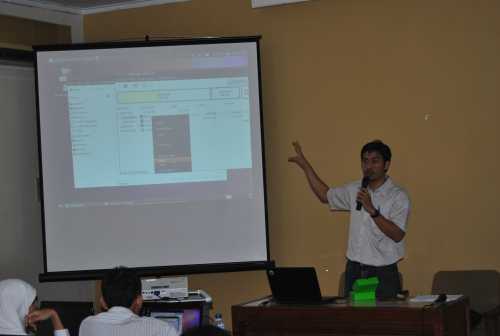
With assistance from the Asia Foundation staff various program had been compiled. In general, the program was divided into 2 Capacity Powering Organization and Capacity Technical Powering Capacity. Several activities that had been and are being run include: SOP Improvement and Evaluation, meetings discussing Structure and Mechanism of Organization and Organizational inventory and comparative study of organizational capacity. Meanwhile for Technical Powering Capacity such as: Stata inhouse training, English training, writing papers, journals and scientific works and the few activities that engaged the outside community, such as seminars and workshops.
After 10 months, this program had shown positive results in increasing the capacity of staff and institutions. This is shown from the ability of staff in the field of data analysis that began to rise. The increase was also seen in the capacity of institutions. This is evident from the many institutions and individuals in Indonesia who proposed cooperation with SurveyMETER both for surveying and in completing the study. (SM)