WAPOR 75th Annual Conference, Dubai, 10-13 November 2022
Wednesday, 30/11/2022


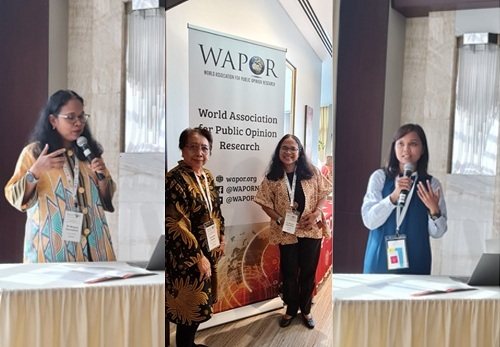
Established in 1947, the World Association for Public Opinion Research (WAPOR) is an international professional association of researchers in surveys and public opinion research. This year, the conference took “75 Years of Worldwide Public Opinion Research” as its theme, and presented the event with prominent speakers in public opinion research. Over 250 researchers from 57 countries attended the conference.
SurveyMETER – the only representative from Indonesia and first to attend the prestigious event – presented two papers in this forum using data from the 2018 World Values Survey (WVS). First paper “Parents’ perceptions on teaching social values and character to their children at home in Indonesia” was presented by Ni Wayan Suriastini, the Executive Director of SurveyMETER. It highlighted values of Indonesian parents’ inclined to be passed down to their children and also looking at parental background affecting this particular issue. Second paper “Internet access and perception on science and technology in Indonesia”, discussed by Dwi Oktarina, researcher from SurveyMETER, argued that people who accessed the internet daily were less likely to have stronger opinion on science and technology than their counterparts. Bondan Sikoki, the founder of SurveyMETER and co-author of the first paper, also present and participated in this event.
On-going conversation and publications with respect to public opinion from various countries around the world broaden knowledge and insight of the participants. Research focusing on public opinion is critical to ensure people’s voices are heard and democracy is being carried out properly.
It is Possible to Lessen the Dementia Symptoms
Wednesday, 29/09/2021Yogyakarta

It was stated by the Governor of the Special Region of Yogyakarta (DIY), Sri Sultan Hamengkubuwono X, in his written opening remarks read by the Head of the Health Office, Pemjun Setyaningastutie, DDS., M.P.H., in Session 1: “Training on Introduction to Dementia and Cognitive Screening for Elderly Posyandu Cadres in DIY”, Tuesday, September 28, 2021.
Sultan conveyed, the government has solicited to manage the elderly while still paying attention to their skills, age, and physical condition socially and economically productive. Improving the quality of elderly health services refers to the Minister of Health Regulation No. 67 of 2015 concerning the Implementation of Elderly Health Services in Community Health Centers. Regardless of that, the Sultan also conveyed the elderly quality of life decline is certain and unavoidable as a result of deteriorating physical and cognitive health that appears degenerative but is very possible to lessen.
"Dementia is one of the diseases due to decreasing cognitive function as one, several, or certain conditions combination that usually characterized by Alzheimer's. It is caused by damage to brain cells that interferes with communication between cells, but that doesn't mean it always characterizes the elderly," said Sultan in his written remarks..
The online training was attended by more than 900 health cadres and relevant policymakers from 5 districts/cities throughout DIY, BKKBN, and the Chairperson of the DIY Elderly Commission. It was held in collaboration with the Yogyakarta Special Region provincial government, regency/city governments throughout DIY, and Alzheimer's Indonesia Chapter DIY, with the support of the Knowledge Sector Initiative (KSI).
The training material was delivered by Sri Mulyani, S.Kep., Ns., M.Ng, a lecturer at the Faculty of Medicine, Public Health and Nursing (FKKMK) of Gajah Mada University Yogyakarta who is also the coordinator of Alzheimer's Indonesia (ALZI) Yogyakarta Chapter. She discussed topics of What is dementia; The signs and symptoms of dementia; The stages in dementia; The types of dementia by the cause; Differentiating dementia and non-dementia; Explaining the various types of early detection of dementia.
The second one is Endra Dwi Mulyanto, S.E., M.P.H., a researcher in the SurveyMETER community-based elderly health study in DIY in 2021. During the training, he also introduced how junior researchers of SurveyMETER collect the data screening through practice interviews.
Parenting in a pandemic: will Covid-19 boost equality in parenting?
Tuesday, 01/12/2020SurveyMETERDani Alfah, S.Sos, M.P.A.

The Covid-19 pandemic has forced adjustments in every facet of life, including family life. Parents of children aged under five years have been challenged to adapt their households to rapidly changing conditions at work, at school and in public life. The result has often been a more intensive relationship between parents and their young children, with implications for early childhood education, as well as parents’ division of labour, employment status and mental health.
Under the age of five, children rapidly develop foundational knowledge and skills. Interaction with caregivers at this stage of life is a crucial building block for early childhood education.
SurveyMETER conducted a phone survey, supported by the Knowledge Sector Initiative, to investigate the state of parenting under-fives during the pandemic. We wanted to see how the impacts of the pandemic – including school closures, directives to work from home, and job losses – affected parents and children at this critical stage of life.
We received responses from 1,302 households with young children in a subdistrict of Nganjuk district, East Java – providing a limited but insightful sample for early analysis of pandemic conditions in the home.
The results showed both positive and negative impacts of the pandemic on parental interactions with young children, household economic conditions, the mental health of caregivers, and opportunities for learning at home. The survey also provides lessons for policy on early childhood education and support for new parents.
Parental interaction with under-fives increased by 38% during the pandemic, but work was not shared equally between mothers and fathers. Mothers remained the dominant parent, with 52.1% reporting similar levels of interaction to before the pandemic, and 44.4% reporting spending more time interacting with their children. Meanwhile, 44.4% of fathers reported no change to their pre-pandemic parenting, and 38.5% reported spending more time caring for children.
Care and attention from both parents is important for cognitive and emotional development for under-fives, and mothers and fathers can contribute equally. The idea that educating and caring for children is solely a mother’s responsibility is of course false but remains common in Indonesia, due to cultural and religious influences.
A draft bill on “family resilience” slated to be discussed in the House of Representatives (DPR) this year threatens to enshrine such outdated domestic roles in law, stipulating that mothers, and not fathers, are responsible for the care of children. This approach is not supported by research on childhood development, and many aspects of the bill continue to be widely criticised by academics, activists and the broader public.
Mothers often develop a close relationship with their children through pregnancy, birth and breastfeeding, leading to their subsequent role as the dominant caregiver. To encourage a more equal division of caregiving labour, fathers should be urged to accompany their partners to appointments at community health centres (puskesmas) and with midwives through pregnancy and delivery. They should also play a supportive role during breastfeeding.
Health extension workers, who provide basic health services and facilitate connections between health services and communities, can also play a role by equally providing mothers and fathers with information about parenting before birth. This can help fathers foster an earlier attachment with their children, and support children’s holistic development.
Unfortunately, the increased time spent with young children in some households was associated with a reduction in income. Income decreased for 70.9% of households during the pandemic, usually because of job loss. As many as 35% of breadwinner parents stopped work at some point during the pandemic, with 19.4% yet to return to work at the time of the survey.
Time spent with children increased sharply in cases where the breadwinner had stopped working and had not yet returned to work: 44.6% for mothers and 38.5% for fathers. In households where the breadwinner continued working throughout, there was still an increase of 30.8% of interaction by fathers, possibly because of directives to work from home, or fathers spending more time at home overall because of restrictions on public activities.
Increased domestic and economic stress also took a toll on parents’ mental health. Generalised anxiety disorder was found to have affected 24.1% of parents during the pandemic, with the highest level found among parents of 6 to 24-month-olds. An overwhelming 95% of those affected were mothers, with the highest rates reported by mothers who were spending more time on childcare. Households where the breadwinner had stopped working and income had decreased were also among the worst affected.
Stress on parents not only affects their own mental health, but can contribute to behavioural and developmental problems for their children. The disproportionate stress borne by mothers during the pandemic suggests that domestic and caregiving duties need to be more equally shared by mothers and fathers, to support the health of the family as a whole.
Early childhood education also took a hit during the pandemic, with formal education becoming unavailable, and children having unequal access to learning resources at home. Our survey asked parents about the range of learning materials they provided to children at home, from story books and colouring books to puzzles, building blocks, and technology-based tools like public television, YouTube and social media.
Concerningly, YouTube was noted as the dominant source of educational material, used by 60.2% of parents, followed by public television at 29.8% and social media at 25.4%. Internet-based tools were used more by households where income had increased or stayed the same during the pandemic than those where income had decreased.
Colouring books were available in 40.1% of households, and puzzles and blocks in 24.4% of households. Colouring books were provided more to girls and puzzles and blocks to boys, suggesting that many parents have deeply gendered understandings of learning and play.
Drawing and colouring introduce children to colours, and enable them to express themselves, improve their motor skills, and develop patience and creativity. Puzzles and building blocks stimulate soft motor skills, recognition of colours and shapes, and encourage imagination and problem-solving. Both activities should be equally available to boys and girls.
Of greatest concern, story books were only available in 10.7% of households. For households where income increased or stayed the same during the pandemic, the rate was only slightly higher, at 14.5%, suggesting that the problem goes beyond income levels. This is disappointing but not surprising given the widely documented low levels of interest in reading books in Indonesia.
Research shows that reading stories to children from an early age improves language and literacy skills, as well as language complexity and story comprehension. The Minister for Education has urged all parents to read to their children before bed to support their education and development.
The findings of the survey suggest that greater efforts are needed at the grassroots level, perhaps through community-based health posts (posyandu), to create a movement to encourage parents to read story books to their children from an early age.
The Covid-19 pandemic is not over yet, and its positive and negative effects on work, school, public life and parenting are likely to be felt for some time to come. The experiences of children and parents during the pandemic point a way forward for stronger policies that can better support new parents and their children’s development.
This small study indicates that fathers need to take a more active role in parenting to ease their partners’ workload and mental stress, and support the healthy development of their children. This can be encouraged by involving fathers in the early stages of pregnancy and breastfeeding through their attendance at health check-ups, and providing them with information on how best to support their partners and children, including by equally sharing in domestic duties.
In pandemic conditions or otherwise, more educational opportunities are needed for under-fives at home. Story books should be available, and parents – both mothers and fathers – should take the time to regularly read to their children. This will not only influence early childhood development, but also improve Indonesia’s literacy levels in the long term.
The Fate of the Elderly Posyandu During the Covid-19 Pandemic
Friday, 10/07/2020YogyakartaHendri Setyo Nugroho, S.H., M.I.P.

Time is rolling past the fourth month since the Covid-19 case was first discovered in Indonesia. Based on data collected, the highest percentage of deaths due to Covid-19 in Indonesia was experienced by the age group ≥ 60 years. As we know, the elderly are one of the vulnerable and easily exposed groups of Covid-19.
Then how does the elderly posyandu play a role in the middle of a pandemic? The government is currently trying to break the chain of transmission of the Corona virus. The call for physical distancing, work, study and worship at home continues to be echoed. All activities that create crowds should be avoided including elderly posyandu activities. The role of posyandu elderly through cadres is very important to always monitor the condition of the elderly.
Although the Posyandu for the elderly was temporarily inactive, the role of cadres is still ongoing. The cadre's role is to provide information to the elderly about healthy living behavior and maintaining health during the pandemic. This information is given when the cadre meets with the elderly on the street or in the mosque. The cadres also distributed masks to the elderly, both of which were bought from posyandu’s fund and from the help of other institutions. Another important role is cooperation between stakeholders, such as with the RT. Because the coverage area is small and close together, it will be easier to monitor the condition of the elderly.
Then do the elderly feel the effects of the Covid-19 pandemic? The social impact is felt by the elderly in the absence of an elderly posyandu, which in turn reduces psychological health. Elderly Posyandu activities not only maintain physical health to always be in shape, but it is also a place to meet with peers, the elderly can communicate with each other. During this pandemic they felt lonely because they could not meet each other.
In addition to social impacts, the economic impact is also felt by the elderly. As experienced by Mbah Marto (70) who usually sells rice at Yogyakarta City Gede Market. But during the pandemic he is no longer dared to go to the market. He only sells rice at home which results in reduced income. The same story is also experienced by many other elderly who are in the same fate with Mbah Marto.
Another impact that is no less important is the low level awareness of the elderly to protect themselves during this pandemic. A concrete example is seen when the elderly do the activity outside their home, many do not use masks. And a lot of them still ask why they have to wear a mask, why they have to stay at home.
Elderly families themselves cannot convey information clearly, many elderly do not watch the news on television, posyandu cadres cannot play a large role in this situation. This proves that the information they received about Covid-19 is still lacking while they are vulnerable to contracting it.
What needs to be done to help the elderly affected by Covid-19?
The elderly are the groups that need special attention. In accordance with the mandate of the "Guidelines for the Protection of the Elderly" by the KPPPA, the role of the elderly posyandu cadre at the community level is needed to help overcome the problems faced by the elderly during the Covid-19 pandemic by involving and cooperating across sectors.
Posyandu cadres hope for assistance in the form of groceries and nutritious food. Elderly is still lacking attention, there is no specific assistance targeting them. Other assistance received by the elderly is cloth masks, basic necessities, hand sanitizers. However, this assistance has not yet been received by all the elderly in posyandu. It is hoped that if it distributes assistance the village government can work together with Posyandu cadres in its distribution.
It is also important to consider how the elderly can get precise and clear information about Covid-19. According to posyandu cadres, they should be given information from competent sources, such as officers from the puskesmas. But in a pandemic like this, health workers already have many tasks to deal with patients at the forefront. One wise step that can be taken is to document information about Covid-19 from various trusted sources such as those published by the relevant ministries.
The village government can help coordinate documentation, then convey it through youth clubs, RT, RW, or posyandu cadres. Cadres with extensive networking will convey information to the elderly. Also involve families and the community to actively explain information about Covid-19 to the elderly. In line with the general guidelines for dealing with Covid-19 issued by the Ministry of Home Affairs, ensure that the elderly obtain awareness and personal protection related to Covid-19.
_____
* The article was first published in Bahasa, in the rubric "INSPIRATION FOR POLICY" SKH Kedaulatan Rakyat, Friday Edition July 10, 2020.
‘Negative COVID-19 but positive pregnancy’: Best to delay new baby
Tuesday, 07/07/2020Dwi Oktarina, S.Si., M.P.H.

As more people stay home during this pandemic, concerns of rising numbers of pregnancies have emerged. West Java Governor Ridwan Kamil recently posted on his Instagram account a screenshot of an article relating to an increase in pregnancies in Cirebon regency, and urged men to “take it slow” with their wives. “Negative COVID-19 but positive pregnancy,” Ridwan posted.
Limited access to health services during this pandemic has led to worries that less people are receiving contraceptives. According to the National Population and Family Planning Board’s (BKKBN) latest figures, 28 million Indonesian couples receive contraception services. However, the board noticed a 20 to 30 percent decline in recipients from February to March, with variations among provinces.
Concerns of a baby boom and population increase are not the only reasons experts are advising couples to delay pregnancies. Head of BKKBN, Hasto Wardoyo, said pregnant mothers were vulnerable during the first trimester and tended to have health discomforts such as nausea. Their immune systems are also weaker than usual, and thus they are at increased risk of infection. We have yet to fully understand the effects of COVID-19 infection on fetuses, nor the effects of medication on the infected mother and fetus.
Pregnant mothers also face more restrictions in prenatal check-ups during the pandemic. Well before the pandemic, Indonesia’s maternal mortality rate was already a major issue, with a high national rate of 305 per 100,000 live births.
Many factors related to the virus remain unknown. While researchers are still striving to discover a vaccine, a few cases of newborns being infected with the virus have been reported. In Wuhan, China, where the world’s first cases were found, a newborn became the youngest individual to be infected with the SARS-CoV-2 virus, reports in early February said, similar to another newborn in mid March in London. The mother in Wuhan had tested positive for COVID-19 before delivery.
Transmission of the virus to newborns is still a matter of speculation, as it is unknown if it occurs in the womb, or is transmitted during delivery or soon after birth as a result of close contact with the mother. A Canadian baby was tested several times following birth in mid May, and its nasopharyngeal swab, plasma and faeces were found to be positive. Yet, the baby was delivered through caesarean section, which means the newborn was protected from vaginal secretion and the amniotic membrane was unharmed. In addition, a sample from a nasopharyngeal swab was taken before the baby had skin contact with the mother. Doctors suggested transmission was likely to occur inside the womb, reports on May 16 said.
However, The Lancet journal recently published a study on nine pregnant women with COVID-19 suggesting that intrauterine transmission was highly unlikely. The samples of amniotic fluid, umbilical cord, breastmilk and the newborns’ throat swab had tested negative for the virus.
In terms of nutrition, the pandemic may limit a mother’s choice of nutritious food, with many families facing increasingly lower incomes. Unmet nutritional needs during pregnancy may impair a newborn’s growth and development. This may lead to stunting, which is already a major national health problem.
The BKKBN has deployed field counselors to provide services to couples through home visits. It also plans to provide contraceptives to 1 million recipients in June. The program is aimed at increasing contraceptive use among those who have stopped using contraceptives during the pandemic.
Despite the government’s efforts, it is still missing the urgent need to target the many more people who are staying home. More educational campaigns are needed to advise couples to delay pregnancies through media such as television and radio. The latter medium would target audiences in more remote areas where television transmission is limited.
Although the health system is overwhelmed in this time of pandemic, extra efforts can be made by empowering and strengthening midwives as counselors in educating couples to delay pregnancy. The National Midwives Association (IBI) lists more than 300,000 midwives in 34 provinces. It would surely be challenging, but small efforts in delaying pregnancies can help to lessen the burden on healthcare providers as well as on mothers and their families during the pandemic.
Volunteers from the nation’s village and subdistrict-based women’s and family welfare groups (PKK) can also be empowered. Volunteers across the country have been mobilized to distribute food assistance to eligible households in their community. They can also help raise awareness among mothers and young couples about maternal health and the importance of avoiding pregnancy during the pandemic by relaying the right information with pamphlets or posters while distributing food supplies.
Every woman has the right to be pregnant and bear a child and every child has the right to grow up healthily in the best possible environment. Still, in this time of uncertainty and limitations, it would be wise to delay pregnancy and wait until the pandemic has subsided. Decisions should be taken with caution, taking into account not only the mothers’ health, but also that of the baby, the wellbeing of the family and the capacity of the health system.
*This article was first published in:
Little Acts of Kindness for Older People in a Pandemic Situation
Monday, 06/07/2020SurveyMETERAstrid Nikijuluw, Bach. Of Business., M.M.

The COVID-19 pandemic has influenced our social system and make the world in a standstill. In Indonesia, as of June 19, 2020, the number of COVID-19 cases reached 43,803. Of these, 14% were elderly (aged 60 and older) and 44% of the mortality rate (2,373 cases). This shows that the highest number of deaths was experienced by the age group ≥ 60 years.
As we get older, our immune system weakens. This makes the elderly more vulnerable to all types of infections. Therefore, it is very important to support and protect the elderly during this pandemic, especially those who live alone. The government must be supported to provide interventions to ensure the elderly get what they need. This support can include nutritious food, basic needs such as food, medicines to support physical health and access to social and mental health support.
In the Special Region of Yogyakarta, as the province with the highest life expectancy in Indonesia, several actions and activities have been taken by various parties in supporting the elderly during the pandemic. We also try to do small activities according to our capacity as a research institution.
Our small activity was a documentation interview about Posyandu service initiatives and breakthroughs by elderly Posyandu cadres during the pandemic in 5 regencies / cities, namely Bantul, Gunungkidul, Kulon Progo, Sleman and Yogyakarta. In the interview we found that among their small activities during the pandemic included distributing masks and knowledge through flyers and posters about how to wear masks and wash hands properly.
In one village in Kulon Progo Regency, an initiative from an elderly posyandu cadre that was quite solutive was to encourage the elderly to continue to carry out additional activities such as gardening. Apart from living in the village and generally their profession is farmers, gardening activities can help economic and social conditions and maintain their immunity. Thus, during these activities they can also interact with each other while still observing the health protocol.
In another village in Bantul Regency, the village youth organization took the initiative to collect funds from local residents that were used to buy food that would be distributed to underprivileged people, including the elderly.
From the small interview activities during the pandemic, there are actually many lessons that we can learn. That the small concern of people in all sectors and ages can have a big impact on the health and happiness of others. We need to realize that the responsibility to maintain a healthy and safe environment rests with all of us. As President Joko Widodo said on Monday 18 May 2020, the most effective way to control the spread of Covid-19 was at the lowest community unit. We will be able to overcome this pandemic, but for that we must make active efforts to stay healthy both mentally and physically for ourselves and for those around us, including the elderly.
______
Thus a glimpse of the lessons we learned from our documentation. We also write notes in another version in the Active Aging Consortium Asia Pacific (ACAP) Bulletin June-July 2020 Edition (pp. 10-11), with the hope of learning from society and the global community. The full note can be read and downloaded here.
Impact of Covid-19 on Child Education
Friday, 03/07/2020SurveyMETERSetyo Pujiastuti, S.Sos., M.Si.
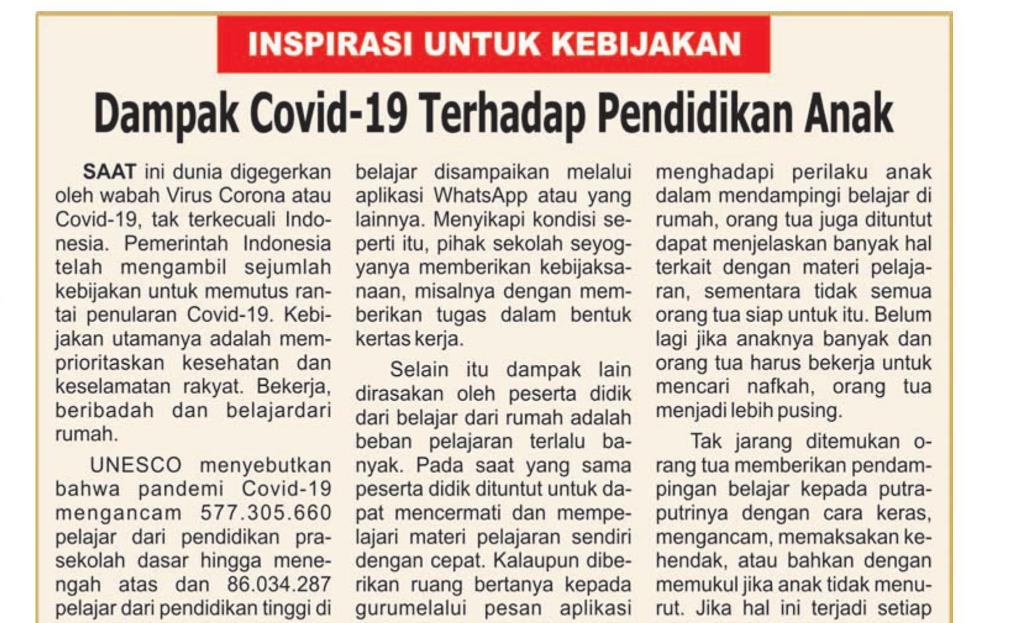
At present the world is stirred by the Corona Virus outbreak or COvid-19, Indonesia is no exception. The Indonesian government has taken a number of policies to break the chain of transmission of Covid-19. Its main policy is to prioritize people's health and safety. Work, worship and study from home.
UNESCO said that Pandemic Covid-19 threatened 577,305,660 students from pre-primary to high school education and 86,034,287 students from tertiary education worldwide. Like the policies adopted by various countries affected by Covid-19 disease, Indonesia closed all education activities. This makes the government and related institutions present alternative educational processes for students by learning from distance or study from home with the assistance of parents.
The implementation of long-distance teaching and learning policies from home or online learning does not seem to be a problem for some universities that already have online-based academic systems. It became a problem for some other universities that do not have the system.
At the level of primary, secondary and higher education technically the distance learning process also experiences many obstacles. Students from families who do not have internet access or even do not have mobile phones would likely miss learning when learning assignments are delivered through the WhatsApp application or others. Preparing for such conditions, the school should provide policy, for example by giving assignments in the form of working papers.
Another impacts felt by students from learning from home is too much learning burden. At the same time students are required to be able to examine and learn the material themselves quickly. Even if given a time to ask the teacher through the message via WhatshApp application it was still felt not enough time. And, the most easily observed by students' parents, teaching and learning from home also makes students easily bored because they cannot interact directly with the teacher and their friends.
Therefore, by learning from home, parents are required to maximize their role in accompanying their children. Especially if they are still in elementary preschool and elementary school. Because at their age, their nature is unique, energetic, active, spoiled and ego-centric (ego is high). This is where parents should be able to explore the character of their children so that the learning process from home takes place well and fun.
Learning from home allows some parents to experience stress in accompanying children if they do not understand the child's character. Parents feel that children are difficult to manage, just want to play, and lazy. In addition to dealing with children's behavior in accompanying learning at home, parents are also demanded to be able to explain many things related to the subject matter, while not all parents are ready for it. Not to mention if they have many children and parents have to work to make a living, parents become more dizzy.
It is not uncommon to find parents providing assistance to their sons and daughters by means of a hard, threatening, forced will, or even by hitting if the child does not comply. If this happens every day then it will be a scourge for children in learning, even though the parents' goals are good so that the child is disciplined and smart. Such parenting will shape children to be timid, shy, quiet, fond of breaking rules, vindictive and lacking in initiative.
Therefore parents must be careful in approaching when accompanying study at home. Parents should be able to treat children with affection, patience, accept children as they are, do not judge, do not force the will, give freedom and respect, and tolerance of their children. Thus the frightening specter of education will not be found otherwise it will create a pleasant learning atmosphere while studying at home.
________
The article was first published in Bahasa, in the rubric "INSPIRATION FOR POLICY" SKH Kedaulatan Rakyat, Friday Edition July 03, 2020.
Pandemic and Environment Burden
Friday, 26/06/2020YogyakartaIka Yulia Wijayanti, S.E., M.Sc.

Regional quarantine and activity restrictions in response to the Covid-19 pandemic had a positive impact on improving air quality globally. However, the real pandemic shows the fundamental problems being faced by the environment.
For example, Jakarta had experienced a decrease in levels of carbon dioxide (CO2) sourced from motor vehicles during the period from February to March. Unfortunately, this only lasted a short time. Motor vehicle congestion with the introduction of new normal conditions will bring CO2 levels back to the normal range.
Improved air quality during the quarantine of the region is difficult to maintain for longer because the changes that occur are not structural in nature such as the shift in the use of fossil-based high energy pollutants to energy sources that are more environmentally friendly. The fall in world oil prices due to reduced demand also confirms this fact.
Even if the reduction in pollution levels can be maintained, the benefits will be far greater. Research by Marshall Burke, a Stanford University professor, shows that decreasing air pollution during regional quarantine will save humans from premature deaths due to pollution exposure in greater numbers than deaths caused by Covid-19 in China. The results of the study are expected to be an evaluation of human behavior in normal conditions that burden the environment.
During the pandemic, the movement to reduce plastic waste tends to be ruled out because of people's fear that the virus can survive on certain objects for some time. The use of masks and disposable gloves by the general public also contributes to increasing household waste.
Meanwhile, the handling of Covid-19 patients has consequences for the abundance of medical waste. The Indonesian Ministry of Environment predicts an increase in infectious waste by 30 percent compared to pre-pandemic conditions. In the midst of the lack of hazardous waste treatment facilities such as incinerators, the increase in medical waste in Indonesia has the potential to cause serious problems such as the processing of illegal medical waste.
If examined further, the mystery of the cause of the pandemic is very likely related to the current environmental crisis. Covid-19 became a global pandemic because of its rapid transmission from human to human through fluids (droplets). However, according to the World Health Organization (WHO) collaborative mission report and the Chinese Government, SARS-CoV-2 as a trigger for Covid-19 is a zoonotic virus. That is, the virus was initially transmitted from animals to humans.
The emergence of zoonotic viruses is closely related to environmental ecosystem conditions where humans and animals share a place of life. Damaged biodiversity and climate change encourage the emergence of pathogens that are increasingly strong due to the process of adaptation to environmental pressures. Meanwhile, wildlife contact with humans increases the potential for human transmission.
New normal for the environment
The experience of fighting new diseases, for a moment feeling changes in pollution levels, and the potential increase in waste that must be managed should raise awareness of the impact of the environmental crisis and what to do in the future. A number of steps need to be considered so that the environment can enjoy a better new normal.
First, changes in production and consumption behavior to achieve continuous improvement in air quality. Efforts to find environmentally friendly energy to replace high energy pollutants need to be prioritized as a long-term investment. Meanwhile, the management of industrial pollutants and the provision of public transportation to reduce the use of private vehicles is quite urgent to do.
Second, the treatment of rubbish and waste, both medical waste and household waste. The movement to reduce plastic waste must continue to be carried out by the whole community while maintaining hygiene. The data collection of people undergoing isolation at home should be followed by a mechanism for collecting household waste that is potentially dangerous if managed under normal conditions. Of course this must also be accompanied by an increase in the capacity of medical waste treatment through incinerators and other alternative processors to be able to meet the needs of waste treatment from health service facilities and household waste at risk.
Third, maintaining the health of ecosystems, among others, by allowing wild animals to remain in their habitats and maintain the biodiversity that supports them. Regulation and law enforcement related to wildlife trade and land use play an important role in minimizing the possibility of contact with humans.
________
The article was first published in the rubric "INSPIRATION FOR POLICY" SKH Kedaulatan Rakyat, Friday Edition June 26, 2020.
Managing COVID-19 Infection in Regions
Friday, 19/06/2020YogyakartaEdy Purwanto, S.P, M.Sc.
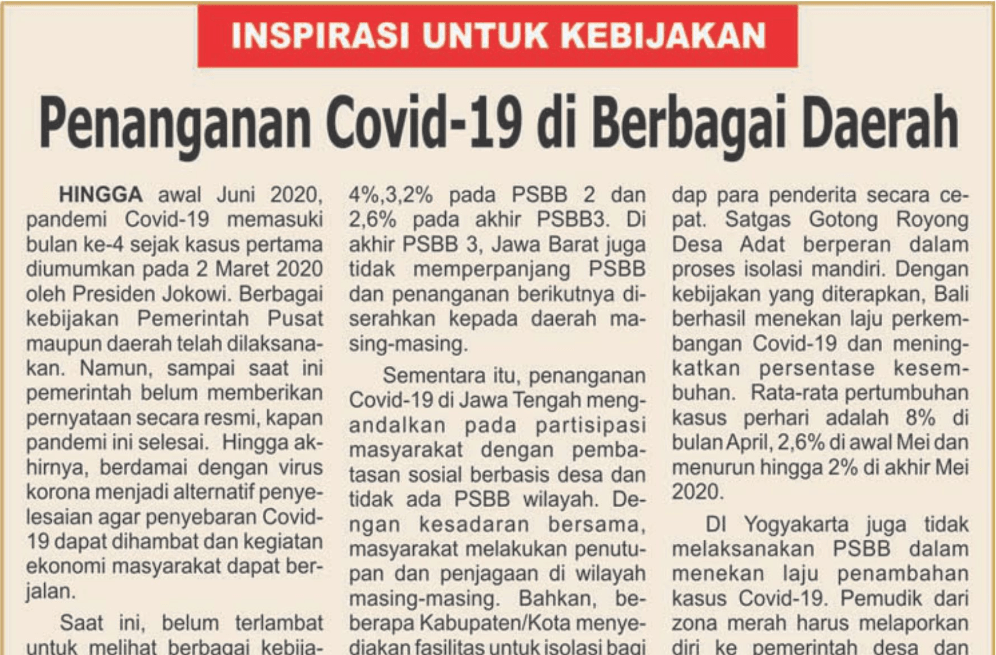
Until early June 2020, the Covid-19 pandemic entered its fourth month since the first case was announced on March 2, 2020 by President Jokowi. Various central and regional government policies have been implemented. However, until now the government has not given an official statement, when this pandemic is over. Until finally, making peace with the corona virus is an alternative solution so that the spread of Covid-19 can be inhibited and economic activities can take place.
At present, it is not too late to look at the various policies that have been implemented in each region, see the strengths and weaknesses and take lessons to continue handling pandemic cases that still continue in some areas to prepare for the second wave.
DKI Jakarta, as the initial development area of Covid-19, quickly implemented the PSBB policy since the PSBB rules were issued by the central government. DKI Jakarta applies PSBB up to 3 stages starting from April 10 to June 4 2020. From the beginning of the first PSBB to the end of the 3rd PSBB the average daily growth percentage has decreased from 5.1% then 2.1% and finally 1.6% in 3rd PSBB. With this result, the DKI Jakarta government finally adopted a transition period PSBB starting June 5, 2020. This period was used as a transition to new normal.
West Java has also implemented PSBB stages 1 to 3 in several regions such as Depok, Bogor, Bekasi and Bandung Raya. The implementation of the West Java PSBB succeeded in reducing the average daily growth rate of Covid-19 positive cases from 4%, 3.2% at PSBB 2 and 2.6% at the end of PSBB 3. At the end of PSBB 3, West Java also did not extend the PSBB and handling then handed over to their respective regions.
Meanwhile, the handling of Covid-19 in Central Java relied on community participation with village-based social restrictions and no regional PSBB. With mutual awareness, the community closes and guards in their respective regions. In fact, several Regencies / Cities provide facilities for isolation for migrants. With this policy Central Java succeeded in suppressing the average daily growth of Covid-19 from 7.5% in April, 2.9% in early May and decreased to 1.1% by the end of May 2020.
In contrast to DKI Jakarta and West Java which immediately implemented PSBB in early April, East Java implemented PSBB from 28 April to 9 June 2020. East Java PSBB was implemented in several areas including Surabaya City, Gresik Regency, and Sidoarjo Regency. This PSBB follows the Malang Raya PSBB which was implemented earlier on May 17-30, 2020. During the implementation of the PSBB in East Java, the average daily development of Covid-19 was still relatively high at 4.9% in stage I, 6.9% in stage II and 4.2% in stage III.
Although Bali does not implement PSBB, it consistently implements a policy of maintaining distance, working, studying and worshiping at home. The governor implements various policies both for patients and medical staff. In addition, officers make early detection of sufferers quickly. The Mutual Assistance Task Force in the Desa Adat plays a role in the process of self-isolation. With the policy implemented, Bali managed to suppress the rate of development of Covid-19 and increase the percentage of recovery. The average case growth per day was 8% in April, 2.6% at the beginning of May and decreased to 2% at the end of May 2020.
DI Yogyakarta also did not implement the PSBB in suppressing the rate of Covid-19 infection cases. Travelers from the red zone must report to the village government and carry out isolation for 14 days. Community participation in monitoring isolation and maintaining community compliance in their respective environments is very large. This policy succeeded in suppressing the rate of Covid-19 infection. The average percentage of case growth per day in DIY is 4.6% in April, 4.3% in early May and decreased to 1.3% at the end of May 2020.
It appears that the adoption of the PSBB shows significant success. This of course must be followed by clear law enforcement. In addition, high participation from the community showed higher results in suppressing the spread of Covid-19. The results above can be a lesson for regions that still need to implement PSBB at a later stage as well as other efforts to stop the Covid-19 infection rate in coming months.
________
The article was first published in the rubric "INSPIRATION FOR POLICY" SKH Kedaulatan Rakyat, Friday 19 June 2020 Edition.
Challenges in Early Childhood Education During Pandemic
Monday, 15/06/2020SurveyMETERHendy Puspitha Primasari, SE
The Ministry of Education and Culture requests that during the Covid-19 pandemic, Early Childhood Education (PAUD) teachers do not give students assignments of any kind. During this pandemic, children are given the freedom to play to their heart's content at home. This was conveyed by Plt. The Director of Teacher Development and Education Personnel (GTK) for Early Childhood Education, Abdoellah, in a video conference on Tuesday 31/3/2020.
Responding to the appeal, not a few PAUD teachers who then apply learning with different methods. One of them a PAUD teacher in Kulonprogo said that since the appeal from the Kulonprogo District Education Office did not provide learning material according to the Learning Implementation Plan a kind of reference for managing play activities in an effort to achieve basic competencies, he had given more assignments with learning material to nurture student’s good habit or habituation.
Nurturing student’s habit during learning at home is actually not much different from what has been applied at school. There are three themes in the material provided, namely PHBS, character education and religion. PHBS materials such as hand washing, bathing, brushing teeth, cleaning your own eating utensils. Character education materials such as helping parents, speaking politely, saying thank you, asking for help. While religious material, for example ablution, prayer, reading iqro, memorizing short letters, praying before doing activities, and so on. The material is in accordance with the curriculum currently in use, the 2013 curriculum.
The customization tasks are given every day through WA groups in the form of instructional texts, audio instructions and also sample videos. Furthermore, parents will accompany and document these activities in the form of videos or photos and then sent to the teacher as material for monitoring and assessment.
Not as easy as imagined
In practice, learning at home with habituation is not as easy as imagined. Lack of enthusiasm from children and lack of ability from parents to accompany children become challenges in the application of habituation method. A school principal in Bantul conveyed to the author, apparently not all parents can be like teachers at school. Many parents are not painstaking, children are usually even yelled at, which also has a less good effect. Maybe because of the situation and conditions, children become less enthusiastic at home so that they are bored, there are no friends, and no one motivating. Because usually in schools teachers convey learning interspersed with art, there is pat, singing, and various other creative interludes, while at home tends to be monotonous.
It is undeniable, one of the characteristics of children is that they are very easy to change their mind and change their mood (moody). That is because early childhood can not control themselves properly. Most of them have not been able to communicate smoothly and convey what is felt. This is still added to the child's learning atmosphere which suddenly changes, from what is usually done with friends with full color and creativity, now must be done alone and less attractive.
Children's moods and emotions that often change suddenly make parents feel confused and overwhelmed. Not all parents understand how to deal with children who behave not as expected. In this situation, it is not uncommon for parents to fail to form communication with children. Instead of understanding children's behavior, parents are more often angry and shouting. This certainly will be contradictory to the learning process that is being carried out.
Another challenge in applying habituation learning at home is the mindset and motivation of parents. One example of parents of students interviewed by the author states that the motivation to send children to PAUD so far has been more than just sending their children to leave work. So, when children do not go to school and only play at home, parents feel that this is the way it should be for children. Motivation and mindset like this can be one reason parents are lazy to assist children in doing the tasks given by the teacher.
Other problems experienced by teachers are related to observation and assessment. During the Covid-19 pandemic, observations can only be made by viewing videos and photos sent by students' parents. This causes the observation activities carried out by the teacher to be very limited. A kindergarten head in Bantul told the author that up to now he could not fully monitor the process of implementing learning at home. In contrast to the time at school, from morning to noon can monitor children, especially their habits such as memorization. Now with this situation the teacher cannot repeat the rote again, so that it is difficult. From the video sent, the class teacher also cannot directly see the child participating in memorizing or not.
Meanwhile, the assessment of the habituation method is an anecdotal note evaluation technique, which is to make a full observation then record all the facts, tell the situation that happened, write down what the child is doing and what the child is saying. These anecdotal notes serve as daily activity journals that make it possible to know the child's development. As a result, due to limited observations, we can be sure that anecdotal recording will not run optimally. This certainly will affect the validity of the assessment made by the teacher.
Sinergy and support
From some of the problems raised by the teacher and the conditions of the parents of the students above, it can be concluded that the implementation of learning with the habituation method does not run easily. The vital role of parents in the application of habituation methods at home has not been accompanied by sufficient understanding of how to assist and guide children according to the rules of PAUD. Parental confusion can result in children experiencing things that should not be experienced at their age. Parents' readiness to create a learning environment becomes critical. While limited observation that causes the validity of the assessment is reduced to a crucial problem experienced by the teacher.
The condition of a pandemic is indeed hard for everyone, especially for parents because the burden of thought and responsibility increases with the intensity of accompanying children in learning at home. However, it is important for parents to open up, open up insights and enthusiasm to learn how to accompany children in the learning process. It is time for parents to realize that children's learning is now fully the responsibility of parents, returning to their nature that parents are the first and foremost teacher for children.
On the other hand teachers are expected to be able to maintain two-way communication with parents and students on a regular basis. Beginning with ensuring the basic needs of children are met, then proceed with sharing tips on educating children according to the method of habituation in PAUD. The teacher must open the door wide as a consultant for parents and foster parental confidence.
The Education Office must play an active role in providing support to teachers and parents of students. Take innovative steps, provide solutions to problems that occur and consider better ways to provide education during this pandemic period.
Past the pandemic is not an easy thing for teachers, parents and children. But all depends on the will. When everything is ready, it is not impossible that PAUD From Home will be fully realized. ***
*This article was first published in:
http://news.koranbernas.id/berita/detail/tantangan-dalam-pembelajaran-paud-pada-masa-pandemi