
Policy Briefs
8 tulisan
-
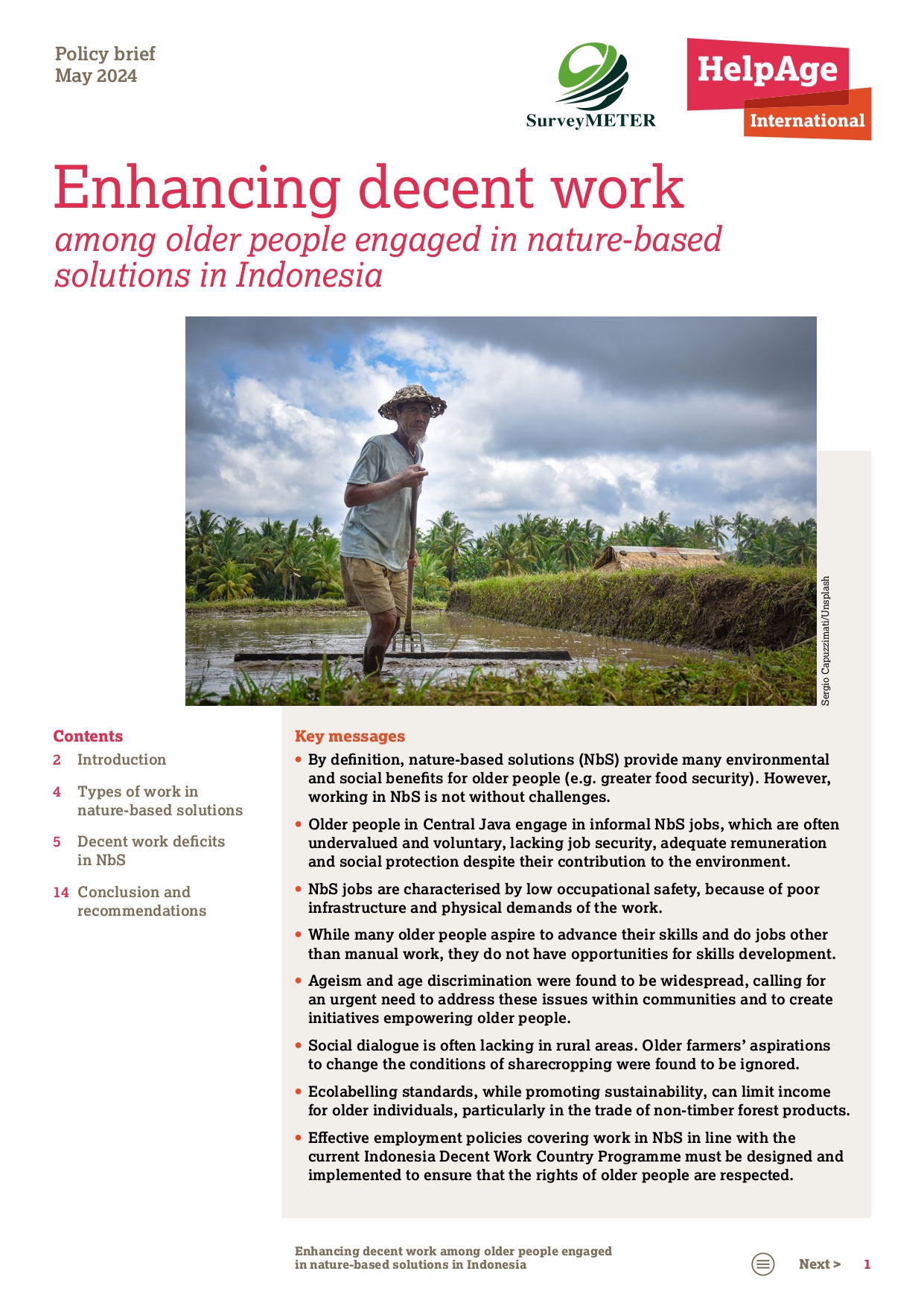
Enhancing decent work among older people engaged in nature-based solutions in Indonesia
By definition, nature-based solutions (NbS) provide many environmental and social benefits for older people (e.g. greater food security). However,...
-
Time to Activate Breastfeeding Behavior Change and Intervention
Prior to the COVID19 pandemic, Indonesia had become one of the countries with the highest burden of stunting and malnutrition in the world. UNICEF...
-
The COVID-19 pandemic is a momentum to change parenting styles for toddlers
The COVID-19 pandemic opens new adaptations to habits for parents of children under five years of age (toddlers) around the world, including...
-
Mental Health Disorders Rise sharply during the COVID-19 pandemic?
COVID-19 gives multiple stress to people's lives. Starting from fears of contracting COVID-19, worrying about dying and losing family members...
-

Encouraging the Birth of Elderly Policy Formulation: Results of the 2018 Bali Dementia Study
  The Bali province has entered the era of the aging population structure in 2017 as the percentage of the elderly population reached...
-
Two of Ten Elderly Have Dementia when Entering Age of 70 Years Old: Evidence from Dementia Study in Yogyakarta
Life expectancy of Indonesia has increased in the few decades; it has now reached the age of 70 years. As age increases, the risk of degenerative...
-

The Suitability of Yogyakarta City Meets the Criteria for an Elderly-Friendly City according to WHO Has Yet to Reach 50% of Score
In 2002, WHO issued the Age-Friendly City guideline in response to two global trends that together comprise major forces: population aging and...
-

Dementia Prevalence Figures, Need All of Our Attention
Indonesia will have an aging population structure in less than four years as the percentage of the population aged 60 years or more is at least 10%....